
Section 05 · Watching the Climb
05Pipeline Oversight
Because opportunities are only created when a real appointment is booked, your pipeline is honest by construction. This section shows how to read it three ways — as a forecast, as a board, and as a filtered list — and how to use won/lost reasons to learn what's working.
The forecast
Open Opportunities and choose the Forecast view. Four numbers anchor it: open pipeline (total value in play), weighted forecast (value adjusted by each deal's probability), won value, and win rate. Below, two tables break the pipeline down by stage and by expected close month.
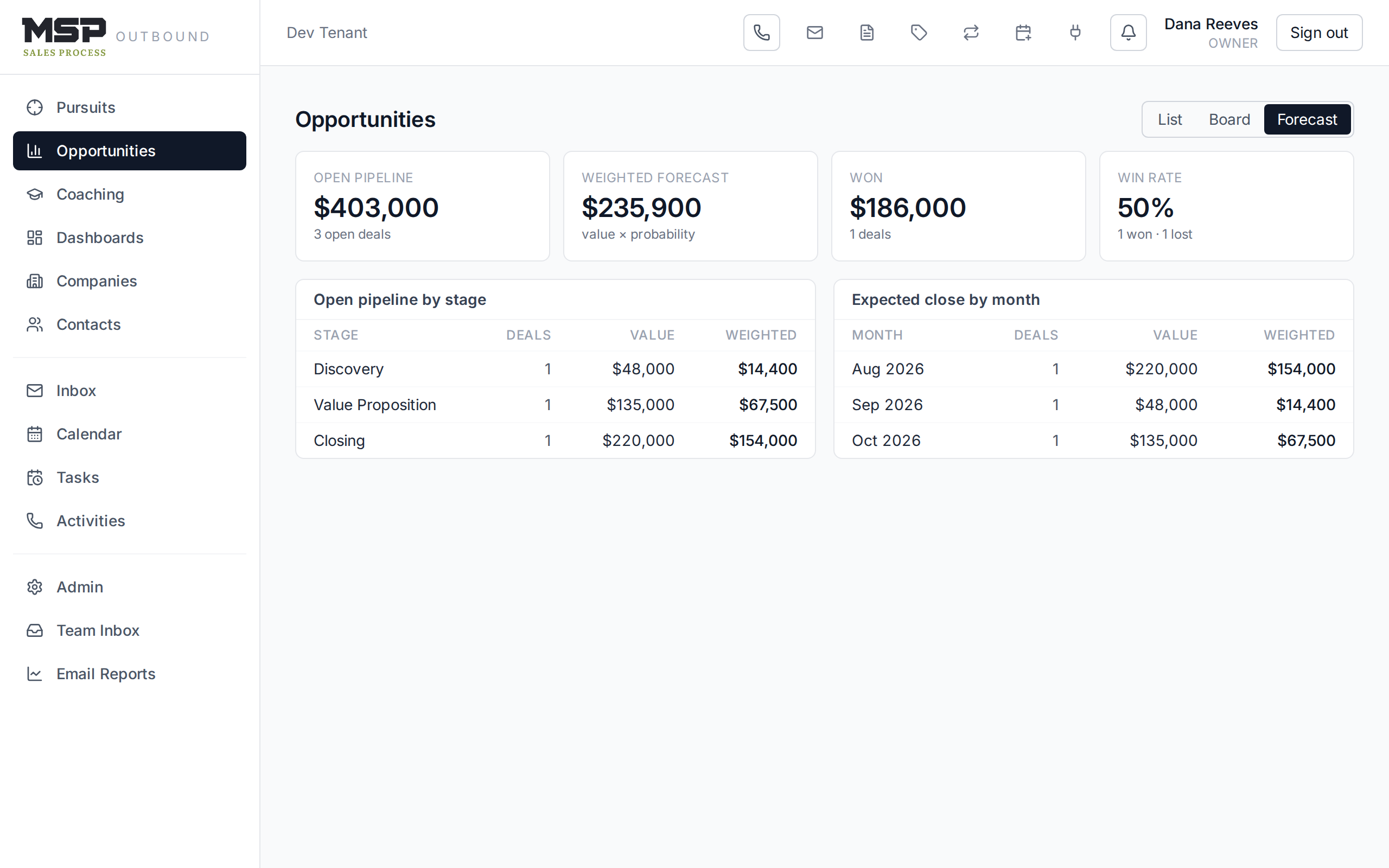
Figure 5.1The forecast. Weighted value is your realistic near-term expectation; the by-month table is your timing.
Good to know
You can filter the forecast to a single owner to review one rep's book before a 1:1. Because a deal only exists after a booked FTA, "open pipeline" here never includes wishful entries — it's all real appointments in motion.
The board
The Board view is a kanban with a column per stage — Discovery, Value Proposition, Closing — each header totaling the deals, their value, and the weighted value. It's the fastest way to see where deals are clustering and where they're stuck. A summary line also shows how many pursuits converted into FTAs, so you can see the top of the funnel feeding the pipeline.
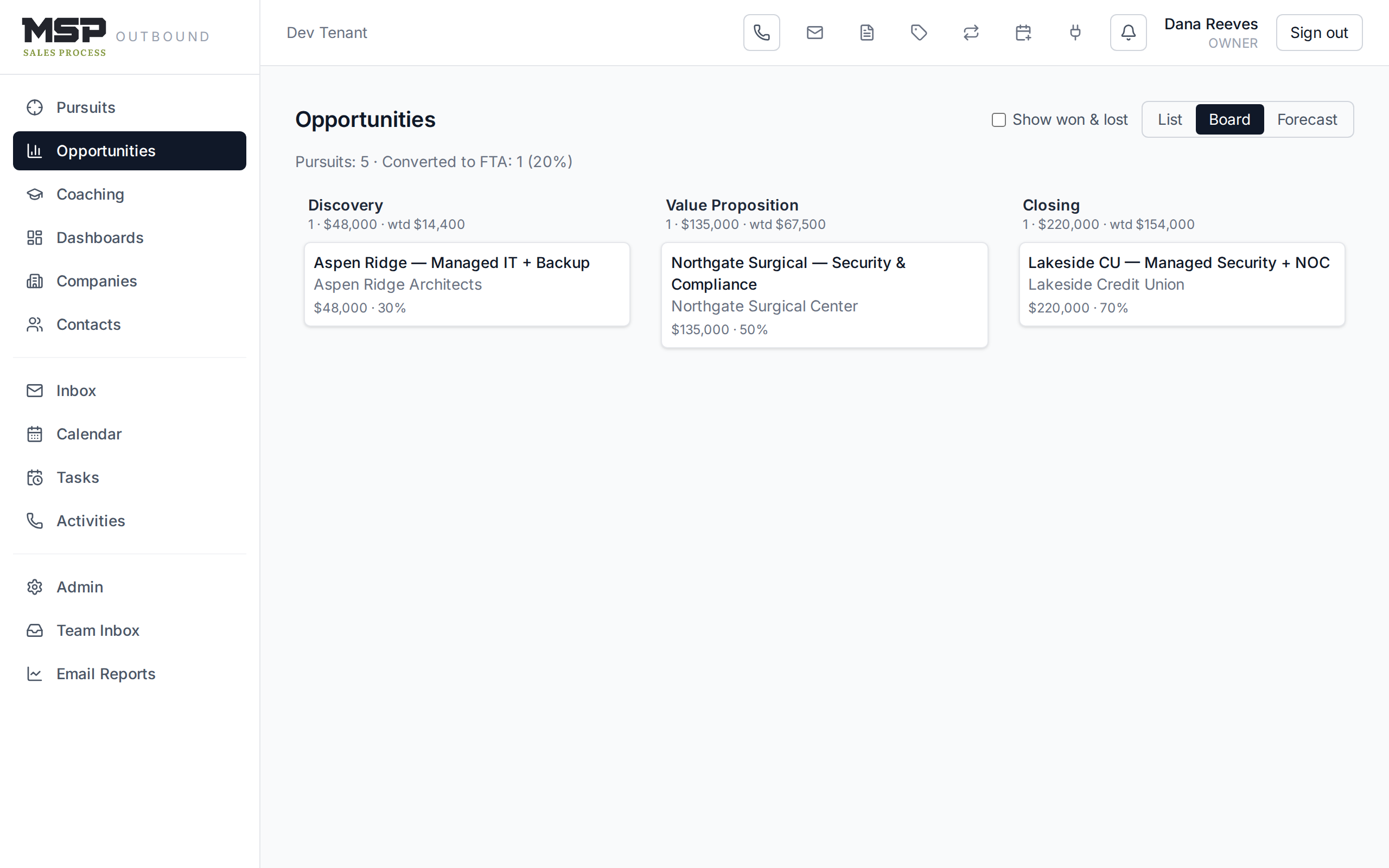
Figure 5.2The board. Watch for a column that keeps growing — deals piling up in one stage is a coaching signal.
Spotting stalled deals
In the list view, rows are tinted by urgency — overdue next task in red, due today in amber — and you can sort by days since last activity to surface deals going quiet. A deal sitting in one stage with no recent activity is the pipeline equivalent of a drift flag: worth a question at the next review.
Reading won/lost reasons
Every closed deal carries a required reason. Over time those reasons become a pattern you can act on. The Coaching Dashboard shows a loss reasons breakdown; a cluster of "price / not enough value" points at value-framing coaching, while "status quo / no decision" points at urgency and next-step control. Wins tell the same story in reverse — lean into what's working.
The method in the tool
Loss reasons aren't a blame log — they're the raw material of coaching. Pair the loss-reason pattern with the coach-by-skill diagnostic from Section 04: the reason names the stage where deals die, and the rep's coaching page names the skill to fix.
The three questions to ask the pipeline weekly
- Is enough entering? Are pursuits converting to FTAs at a healthy rate?
- Is anything stuck? Which deals haven't moved or been touched?
- Why are we losing? What does the loss-reason mix say about where to coach?
The bottom line
An honest pipeline, read three ways.
Forecast for the number, board for the flow, list for the detail — and let won/lost reasons turn every closed deal into a lesson for the team.